
Is collaborative intelligence a new phenomenon, a fad, an irreversible trend…?
Collective intelligence and collaborative intelligence have always existed. But in an era like the present one, marked by crises and intense competition in many sectors, and by the support of new technologies, certain trends have emerged that set in motion a wealth of collaborative principles and developments among citizens, consumers, companies and professionals.

These trends offer a range of working models that the DirCom (director of communications) can apply, and they will no doubt begin to be tried out more intensively in their field of activity in the near future. But they are already spreading more and more widely in other fields, such as management and the creation of new business models, education, marketing, shared and collaborative consumption experiences, citizen journalism, social innovation…
Before the internet era, important phenomena of sociocultural transformation and empowerment of audiences (employees, customers, consumers, citizens…) were already taking place. But now there is a genuine qualitative leap driven by the current revolution of the digital age: what has been created is a new scenario, which fuels the blossoming of all these phenomena, trends, technological supports and management tools, working philosophies and conceptual efforts in the field of collaborative intelligence.
Today the most advanced organisations do not see the empowerment of internal and external audiences as a threat, but as an opportunity to tap into their experience and intelligence and incorporate them into planning, innovation and management processes. See “The Cluetrain Manifesto”, for example.
To carry out their work within the paradigm of collaborative intelligence, the DirCom needs to use procedures designed to listen to their audiences, since listening to stakeholders day to day, managing the conversation on social networks, spontaneous listening, functional listening… are not enough to bring the intelligence of the audiences into communication.
To create collaborative intelligence, instrumental listening must be applied. The collaborative intelligence produced by the DirCom is neither spontaneous nor peer to peer; it is intentionally managed through the application of specific procedures and tools.
The production of collaborative intelligence in the DirCom’s management follows a common sequential process:
1st. A clear definition of the objectives
2nd. The selection of the internal and/or external audiences to involve
3rd. The selection and/or design of the procedures and tools to be used
4th. Managing the invitation of the audiences
5th. The participation of the audiences in producing content
6th. The processing and interpretation of the content
7th. The development of ideas, insights, strategic approaches… the production of intelligence as such.
8th. The application of that intelligence to strategies and operational projects
9th. The evaluation and measurement of the results obtained
10th. Based on the evaluation, the enrichment and redesign of processes, projects and organisational culture
Is collaborative intelligence in communication profitable? Is there a return on investment? What is the “ROI”?
To begin with, we believe it is necessary to move beyond the reductionist tendency to assess the results of the DirCom’s management of intangibles in terms of sales, profits or any form of “financial return”. The DirCom’s work undoubtedly involves investing human, financial and logistical resources, a commitment to certain values, etc., and those efforts certainly have a “return” in terms of direct benefits (reputation, engagement, positioning, culture, branding, social licence…) and indirect ones (sales, profits…).
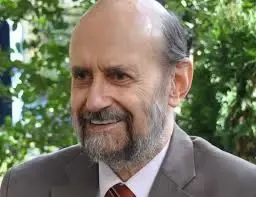 Article courtesy of my good friend Guillermo Bosovsky, Managing Director of DOXA, with whom I have shared a passion for marketing at the Asociación de Marketing de España (Spanish Marketing Association) for more than 20 years. If you want to read the article, here it is in full.
If you are interested in communication and branding and want to train, Guillermo is the director of the Master Brand, a university master’s degree with first-class lecturers.
Categories