
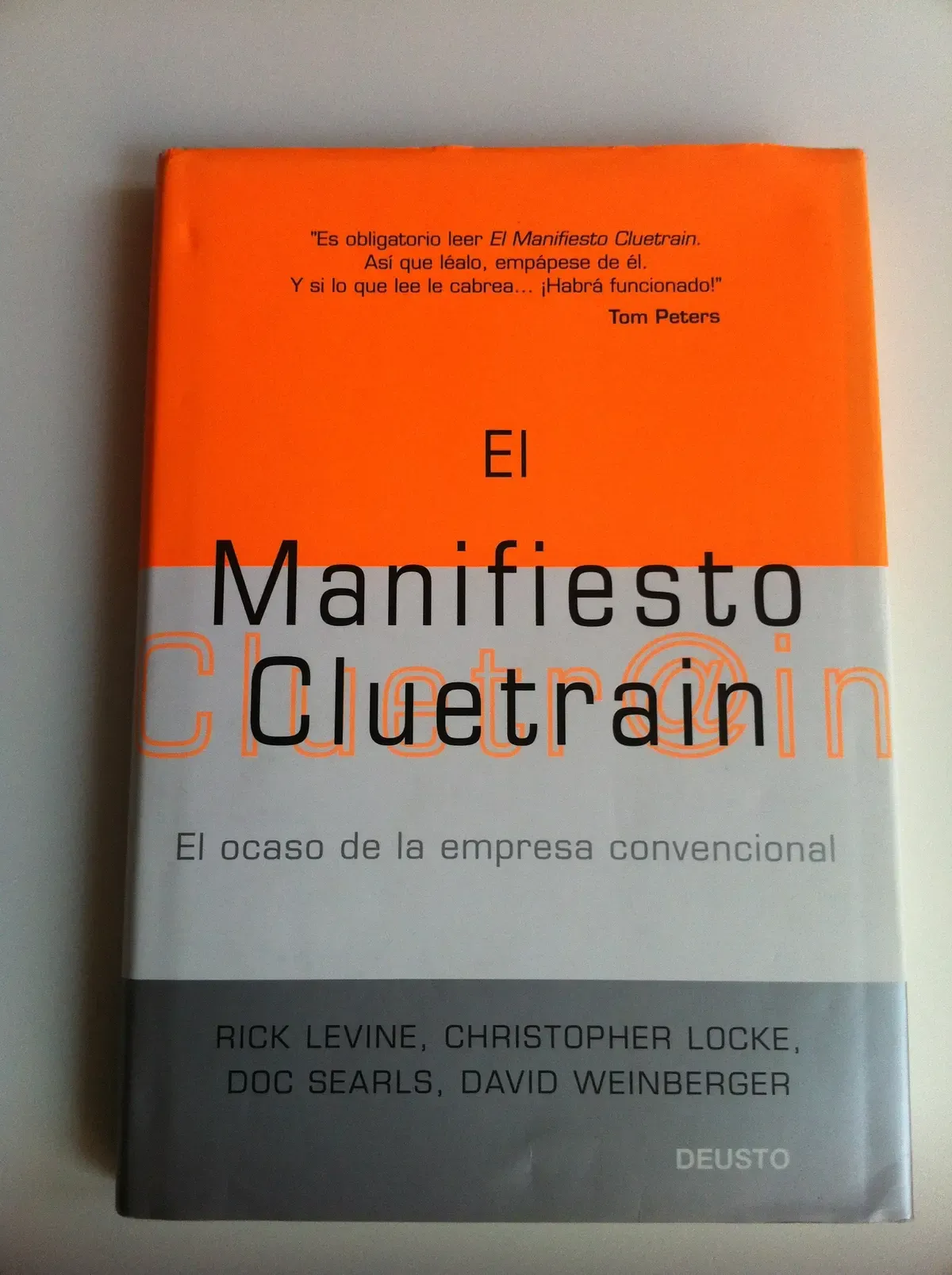
The Cluetrain Manifesto is undoubtedly an essential book, required reading for all of us who are passionate about the internet as a communication medium, and one that many companies that have not yet taken the step should also pick up.
The book sets out a list of 95 theses, ordered and presented as a manifesto, or a call to action, for all businesses operating in what it suggests is a newly connected marketplace. The ideas in the manifesto set out to examine the impact of the internet on both markets (consumers) and organisations.
What’s more, both consumers and organisations are able to use the internet and other networks to establish a level of communication between these two groups that did not exist before. The manifesto suggests the changes organisations need to make to respond to a new market environment. (Via Wikipedia)
Even though it was written in 1999, the book is still entirely relevant. But how can that be? Firstly, because most of its authors were working flat out in companies or projects that were 100% technological, in which the internet was key.
Another reason I come across every day is that a large proportion of companies still haven’t figured out what it’s all about, that is, how to make the most of the internet as a two-way communication channel with their customers.
If you don’t believe me, look at the tone many companies use on their websites, how they communicate, what they talk about… as a general rule they tell us who they are, what they do and how good they are. In other words, a one-way communication channel, since they don’t invite you to act, to join the conversation; they don’t have, or don’t include, what are now their classic social channels, such as Twitter, Facebook or LinkedIn, to talk to you and listen to you.
Ten years ago some people dared to say these channels were a fad, and how wrong they were, because if you have no presence on any social network you are missing the whole picture. Even if you are a micro-business, a remote farm in the mountains making artisan products, you will need to keep a window open to the world to tell people what you do and get feedback from your potential customers, suppliers and fans of your brand, product or service.
Even before reading The Cluetrain Manifesto, I was already clear about how important it was to squeeze every drop out of the internet and social media as a fantastic opportunity to listen to and talk with my customers in the companies I have worked for. Reading it recently has confirmed for me the importance of always thinking from the customer’s point of view when creating the content we use in the different online channels, since the messages here are very different and will also vary depending on the setting.
How do you move from offline to online?
This is a field in which I feel very comfortable, having done it with some of the SMEs I have worked for, and the Manifesto tells us how to do it.
- Do you know who you are, where you come from? Tell people, but honestly, simply, without arrogance
- Do you have an open mind? And your team? This has to come from the top down: management has to be convinced, but it will rely on your team for the transformation.
- Who in your company communicates with your customers? Identify the professionals in your team who know your customers better than anyone, who have empathy, and if they are digital, so much the better.
- Is your team ready? If not, you will have to train them to use good netiquette, so they don’t put their foot in it when they speak on behalf of your company online.
- Is your website 1.0 or 2.0? That is, is it open to user comments, to people asking us questions, to them finding out everything about us; does it have some networks integrated, a Zopim chat to respond…
- Are your customers at the centre of your business? If not, you’re on the wrong track. Everything has to revolve around them: the development of your products or services as well as the communication you put out.
I hope this encourages you to reflect on and analyse how you communicate with your customers over the internet, and if you read the Manifesto, so much the better.
Categories