
With this post I want to look back on my adventures and misadventures in the entrepreneurial ecosystem over the last 15 years.
Despite having been an entrepreneur before the age of 18 with my company Flexi Music, in the years that followed I paid no attention to the entrepreneurial ecosystem. After my first experience at Caixa Bank while I was studying, and after landing in Madrid, I went to try my luck at a couple of SMEs (ESERP and CESMA), but my goal was the multinationals.
In 2000 I joined XEROX, a great school of sales, managing key accounts. But WATCH OUT: the second multinational I joined, in 2004, Regus, had been founded by a top-notch entrepreneur, Mark Dixon (his story is well worth reading), of whom I became a die-hard fan. He started from the very bottom, the classic example of the self-made businessman.
At Regus our usual customers were multinationals setting up their Spanish headquarters with us, as well as some medium-sized companies and, now and then, entrepreneurs. The start-up cost was high for them, so they took the cheapest services, such as a virtual office or a registered business address.
We had some start-ups that were growing internationally and we were their best option, one of them being Google, which opened in Spain with fewer than 15 employees 😉
I join a dot-com 😉
Next jump: I went to XING.com, a real German start-up where there were barely 100 of us, and that’s where I started to get bitten by the entrepreneurship bug. I loved the speed at which start-ups move and, without a doubt, the good vibes and the flat structure, in which the CEO and management team aren’t on a pedestal. I was just below the Country Manager for Spain and reported to head office.
At XING we sponsored several entrepreneurs’ events, we were at the main events in the sector and I signed up 25 ambassadors across Spain, all with an entrepreneurial profile.
I had already been bitten by the bug, so I got hooked on this ecosystem, which in 2008 was still in its infancy in Spain. We had few success stories, but start-ups like Idealista, Coches.com, Top Rural, El Tenedor and Ticketea were already starting to grow and close their first rounds.
As for accelerators, there were Tetuan Valley in Madrid and SeedRocket… a sector I ended up fully immersed in.
As for investors, the regulars were Cabiedes, Carlos Blanco, Bernardo Hernandez, Rodolfo Carpintier and a dozen more, but the best thing was that you could see them at the First Tuesday event organised by Carlos Blanco or at the legendary Iniciador events.
It was at the end of 2009 that I moved on to run an SME, Affirma Business Center, and decided to focus on entrepreneurs. We created coworking spaces in our offices, expanded our virtual office services and, of course, took part in the main events of the entrepreneurial ecosystem: Iniciador, Salon Mi Empresa, Last Thursday, Beers & Blogs, etc.
Goodbye SMEs and multinationals, hello start-ups!
And now, the key jump that put me “in the spotlight” of the entrepreneurial ecosystem… I was hired as Executive Director or CEO of AJE Madrid, the Asociación de Jóvenes Empresarios de Madrid (Madrid Association of Young Entrepreneurs), the pioneering organisation set up in 1984 to support entrepreneurs.
One of my challenges was to launch the new headquarters, “el garAJE”, which, thanks to my team, I managed to place at the centre of the entrepreneurial ecosystem nationwide. How?
- By creating a coworking space; in Madrid there were hardly any, and in the style of the garAJE only Utopicus and the Impact Hub.
- By creating the entrepreneur’s “MOT”, a 360º service to help entrepreneurs with everything from their business plan, marketing, legal matters and HR to raising finance.
- By organising hackathons every other week… such as Startup Weekend, Iweekend and challenges from companies like Cisco.
- By co-organising the top events that already existed for entrepreneurs: Iniciador, Last Thursday, Innosfera
- By being the perfect place for company presentations
- By being the perfect place for investment forums.
- By starting to give entrepreneurship classes and talks at public and private universities
- I signed the launch of, and collaborated with, the Region of Madrid Mentoring Network
As a result of all these initiatives, people started calling me to sit on the jury of several awards for entrepreneurs and to be a mentor at some accelerators.
Here is an interview I gave on Canal CEO
And after AJE Madrid, what next?
At the graduation of my master’s students at the UCJC campus I bumped into the director of Careers, who told me: “Félix, we’re going to present SEK Lab to the presidency, an incubator and awards for entrepreneurs. If they give us the go-ahead we’ll need someone to lead it. Do you know anyone?” …
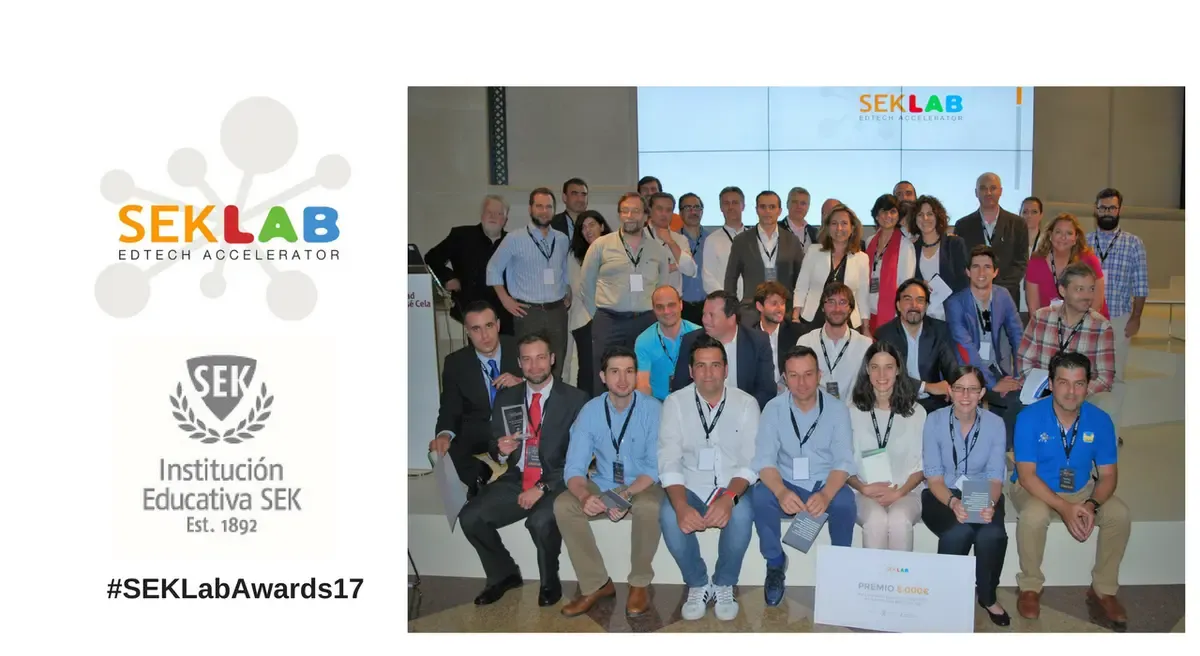
I went through the selection process and on 1 October I joined SEK Education Group to launch SEK Lab. But I gave it some thought and, looking at the institution’s track record and DNA, I changed the focus and we created SEK Lab Edtech Accelerator, the first vertical accelerator in Spain.
In just 2 months I set up the website, the rules for taking part, a network of mentors, the benefits we were going to offer start-ups, workshops, events, the marketing… and we had 38 applicants.
In October 2023 SEK Lab turned 8. In that time we have gathered more than 50 mentors, accelerated nearly 100 start-ups with a 70% survival rate, signed agreements with the main peer accelerators worldwide, built a network of more than 300 investors and a presence at the key events in the sector, and the media call us… what more could you ask for?
This last milestone is perhaps the one I am proudest of, although all of them have had a good deal of impact: at AJE Madrid we supported more than 3,000 entrepreneurs a year, but at SEK Lab the focus is on companies that innovate in education and have a social impact.
I almost forgot… in 2019 I joined Conector Startup Accelerator as Program Manager to run its Madrid programmes. I significantly grew the mentor network and partner agreements, and I even took the plunge and invested in a couple of start-ups.
On the other hand, since my first contact with mentoring in 2011, I have supported more than 70 start-ups, or rather entrepreneurs, both men and women.
Categories