

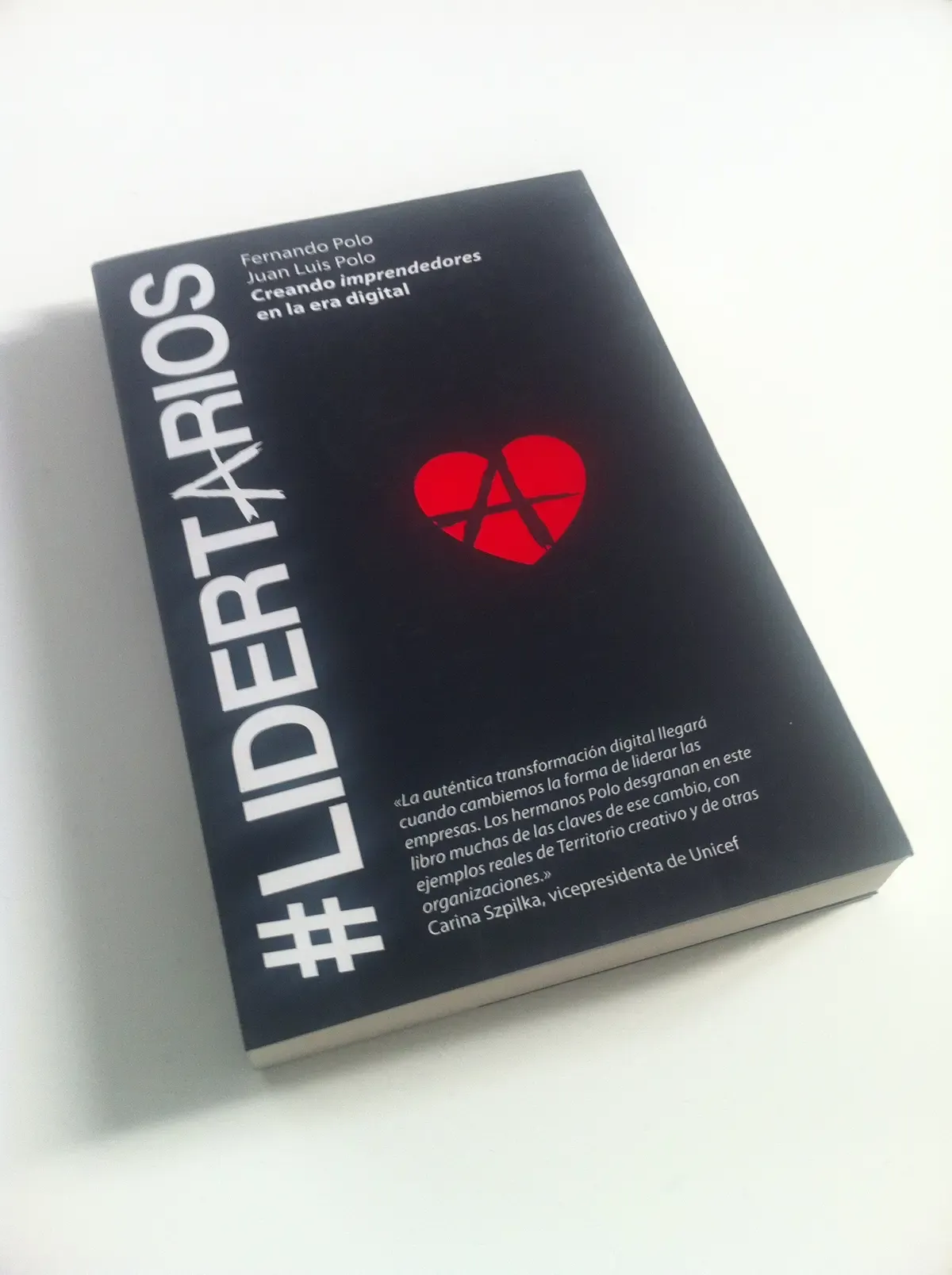
Lidertarios (roughly, “Leadertarians”) is the new book by the Polo brothers, whom I greatly admire, Juan Luis Polo and Fernando Polo, and whom I envy for having created a unique company, Territorio Creativo, with a powerful company culture: the #Tecerianos.
We’re 1.0 friends, since we’ve known each other since before Twitter came into our lives, not to mention a whole string of other social networks. I started following them, as any good marketing man who wants to stay informed would, through what has been the go-to marketing blog in Spanish for the last 10 years. You can read it here.
They’d already dipped their toes in before with a very practical book, Socialholic, for getting to know this little 2.0 world and all the tools at our disposal inside out, but this book is a different story altogether.
They warn that it’s a book with plenty of self-promotion, but you have to admit they’re good, that they’ve created a cool company that people want to work for. They have the guts and the conviction to have turned their company into a cooperative, a very flat structure in which every employee matters.
What’s more, the book starts from their story of overcoming adversity, when their company hit rock bottom in 2009 after the 2008 crisis, on the brink of ruin, unable to pay salaries and with the team falling apart. They’ve gone from 5 to 100 employees over the last 5 years thanks to their new Lidertario spirit.
In Fernando’s words, why a lidertario?
The 21st century demands a new kind of leader. A leader who seeks meritocracy, not autocracy. Who grants autonomy and freedom in exchange for responsibility. Who understands digital dynamics, practises digital values and connects with the point of view of the new generations.
What are the defining traits of a #Lidertario?
- A leader connected to the people they work with, who listens to them, talks to them and shows them “affection” in public, transparently, without fear or reservations.
- A leader who is more teacher than boss. Who inspires, teaches and helps. A “service-minded” leader.
- A steadfast and consistent communicator: who reads, writes and speaks in public. And who doesn’t give up any of those three tools to inspire and guide.
- A leader in partnership. Who doesn’t cling to a position. The lidertario guides and has no qualms about being guided. I inspire in some things, and I am inspired in others. Hierarchy imposes “ranks” and “positions”. The lidertario requires neither. They lead and are led.
- An intrapreneurial leader. Who knows you have to push, that you have to pull your weight. Who asks for forgiveness rather than permission. Who knows that bureaucracy and consensus kill innovation. And who knows that their crusade increases the common good of the cooperative project.
- A leader who grants “freedom in exchange for responsibility” and who shuns control and the “I give the orders here” approach.
- A humble leader. “The more convinced we are that we have deserved it, the further we are from deserving it.”
 I couldn’t agree with them more. Since 2004 I’ve had to manage people, and I think I’ve been a natural leader: I’ve known how to motivate my people and they’ve enjoyed working with me. In 2009 I was lucky enough to move up to the next level and run an SME with 20 employees, and I think I’ve already applied some of the principles Juan Luis and Fernando set out in their book: giving your team autonomy, leading by example, transparency in communication… things many bosses today don’t practise.
If you want to be inspired, go from boss or manager to leader and transform your company, putting your employees and customers at the centre, I recommend reading this book. They draw on their personal experience and also on a good number of international examples of companies that have dared to take the step of practising a new kind of management.
Enjoy!
Categories