
If your name is José, people call you Pepe, you call it Bar Pepe and you offer the same as the bars around you, then no.
But if, before opening your bar, you plan everything and give it your all to innovate and do things differently, that changes things.
This year I’ve worked a couple of times with La Viña, La Asociación de Hostelería de la Comunidad de Madrid (the Madrid Region Hospitality Association), on a course on “Starting a business in the restaurant trade”, and there’s no doubt that opening a bar or a restaurant is one of the most common entrepreneurial adventures in our country.
In Spain we’re very fond of improvising, and look where it gets us. So if we want to open a bar and not close a year later, we’d better follow the basic steps for setting up a company, based on a business plan.
1. Do I have an entrepreneurial profile?
First of all, think carefully about whether you’re cut out for this: for driving things forward, having knowledge and experience of the sector and, above all, leadership skills, running a team and handling the day-to-day management a business involves.
2. Do I have the resources?
A bar involves an even larger investment than a conventional service company. Opening a bar of around 100 m² will cost you a minimum of around €60,000. You’ll almost always have to take on building work, refurbishment, fitting out, licences, etc. To find out more, have a look at the blog “Montar un bar y sobrevivir” (“Opening a bar and surviving”).
Then set aside money for marketing, customer acquisition, events and, above all, staff.
3. Do I know the market?
Rule number one of marketing: do some market research. Is there demand in my area? What age and socio-demographic profile do people have where I want to open? Is there footfall in the area? Supermarkets, cinemas, leisure…
What other complementary businesses are nearby? What competitors will I have close by? What price should I put on my products? What kind of bar is missing in the area?
You’ll answer all these questions by looking for data that’s already published, doing surveys or simply by observing and using common sense.
4. Do you have a plan?
Then you need a business plan. With it you’ll become aware of everything you need and the steps you have to take to get it as right as possible. In it you need to set out a description of your business, the goals you’re pursuing by opening it, the resources you have and how you’re going to reach those goals.
An internal analysis of the human, technical and financial resources you have, and an external analysis of the market you’re going to face. In short, the classic SWOT: your weaknesses, strengths, threats and opportunities.
The plan will also help you present your project to potential collaborators, investors or the banks if you need capital.
5. A little marketing?
Not a little: a lot, from the very start.
You need to come up with a good name or brand for your bar, one that hooks people, that’s original and memorable, with a distinctive, carefully crafted image. You have to stand out.
The concept has to make you unique. There are quite a few aspects, especially service, that will set you apart from the rest. You can mix concepts: a bar-travel agency, a bar-library… or a Wild West theme bar, a bar inspired by films, a bar for motorbike fanatics… whatever you can think of.
 6. Are you in the right place?
We saw this earlier, but it’s one of the keys to a business like this. If the venue is unique in its decoration, its design, what you offer and the atmosphere you create, and you work hard at attracting customers, people may come anyway; but if it’s well located, with access by public transport, easy parking and in a fashionable, busy area, you’ll score more points.
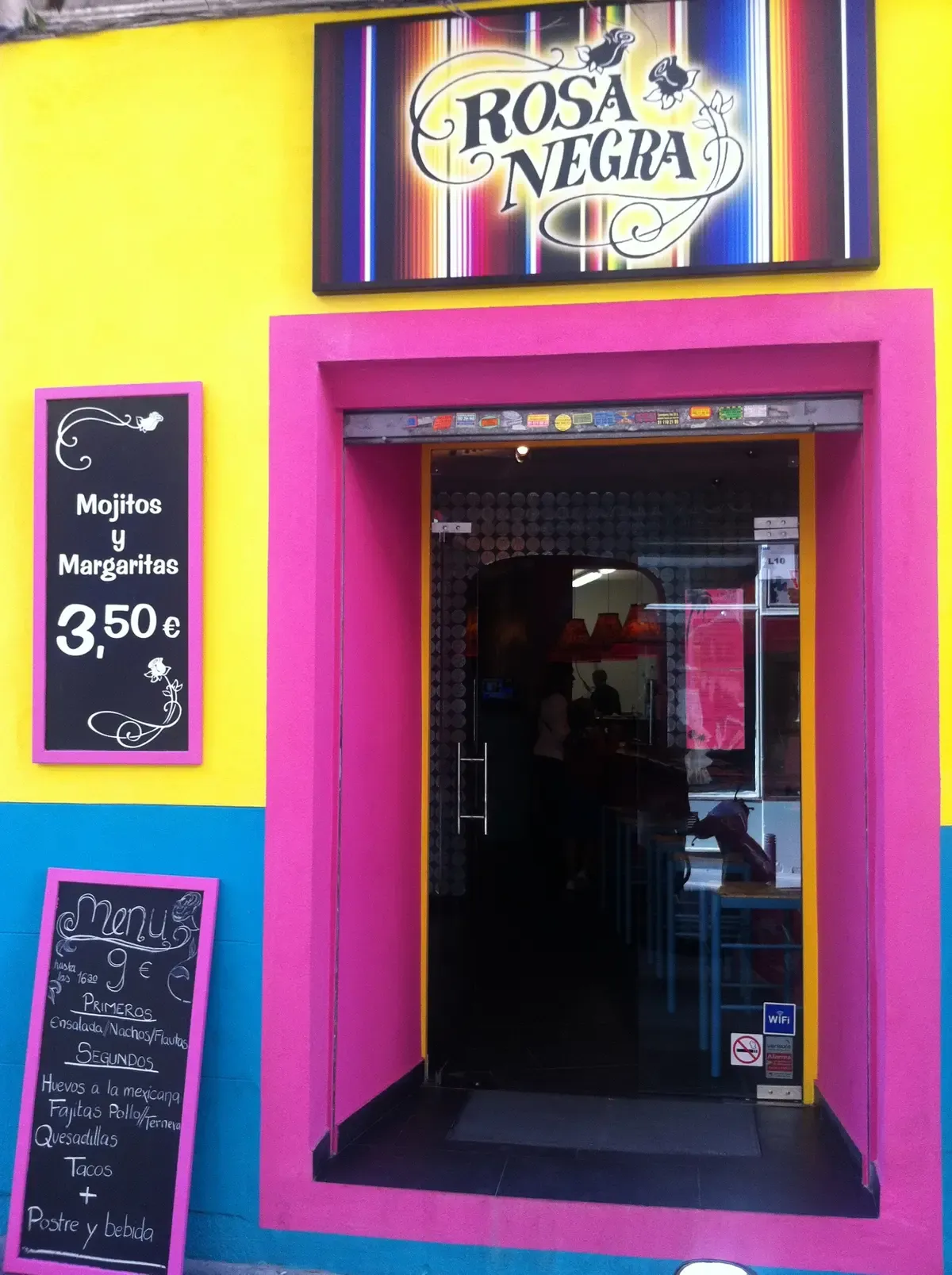
Your venue is the heart of your business, so take the utmost care over every detail: from making it accessible to everyone and visible from several hundred metres away, to a façade that invites people in and an interior that makes you never want to leave.
To give you an example, Rosa Negra Restaurant in Madrid, a Mexican place launched by my friend Rafa.
7. A franchise?
Why not? Thanks to their experience, they’ll save you a lot of work. You’ll already have a recognised brand, recommendations on where to locate the venue, the fit-out, furniture, prices agreed with suppliers and, of course, the marketing and communication activities.
In any case, analyse all the options: the franchise’s image, other business owners’ experience with it and the entry costs. Here you’ll find some interesting information.
8. The launch?
Yes, of course: the moment of the launch has arrived, and you have to do it in style. If you’ve done your homework properly, you’ll be in a good area and your brand image will be strong and attract people on its own, but how about a little push?
Call on all your friends and acquaintances so they’ve already heard about your business idea beforehand, and identify the VIPs or ambassadors who are going to bring more people to your venue.
Spread the word through every possible channel, from the local paper to directories and social media.
9. Do you have a team?
Few bars are run by a single person, so pay special attention to the team you build for your bar. Pay them and treat them well, and make them part of the project so they get involved with you. Some hires will even bring people in with them. Look for professionals from the sector who stand out for their people skills: everything depends on the service they give your customers.
10. Does this run by itself?
No, it doesn’t: neither your bar nor any other business runs on inertia. You have to reinvent yourself every five minutes to keep innovating, being original and surprising your customers, without ever stopping communicating, and improving the management, the team and the products or services you offer.
Pay very close attention to comments from customers and users on your Facebook page, on Foursquare, 11870.com, Google Places, etc.
Let others help you and get advice from a professional association, for example La Viña in Madrid (which will answer all your questions), or a business association such as AJE Madrid, or whichever one applies where you are: have a look at the CEAJE website.
Good luck!
Categories